












- Details
The Civil Service Commission (CSC) supports the national government in fulfilling its commitment to assist eligible Contract of Service (COS) and Job Order (JO) workers in obtaining the necessary eligibility for permanent positions in the government by issuing the Career Service Eligibility - Preference Rating (CSE-PR).
This initiative stems from President Ferdinand R. Marcos Jr.'s directive during a sectoral meeting with the Department of Budget and Management, Department of the Interior and Local Government, Commission on Audit, and the CSC. The aim is to boost the skills and capabilities of COS and JO workers, empowering them to successfully pass the career service examinations, a prerequisite for pursuing career service positions.
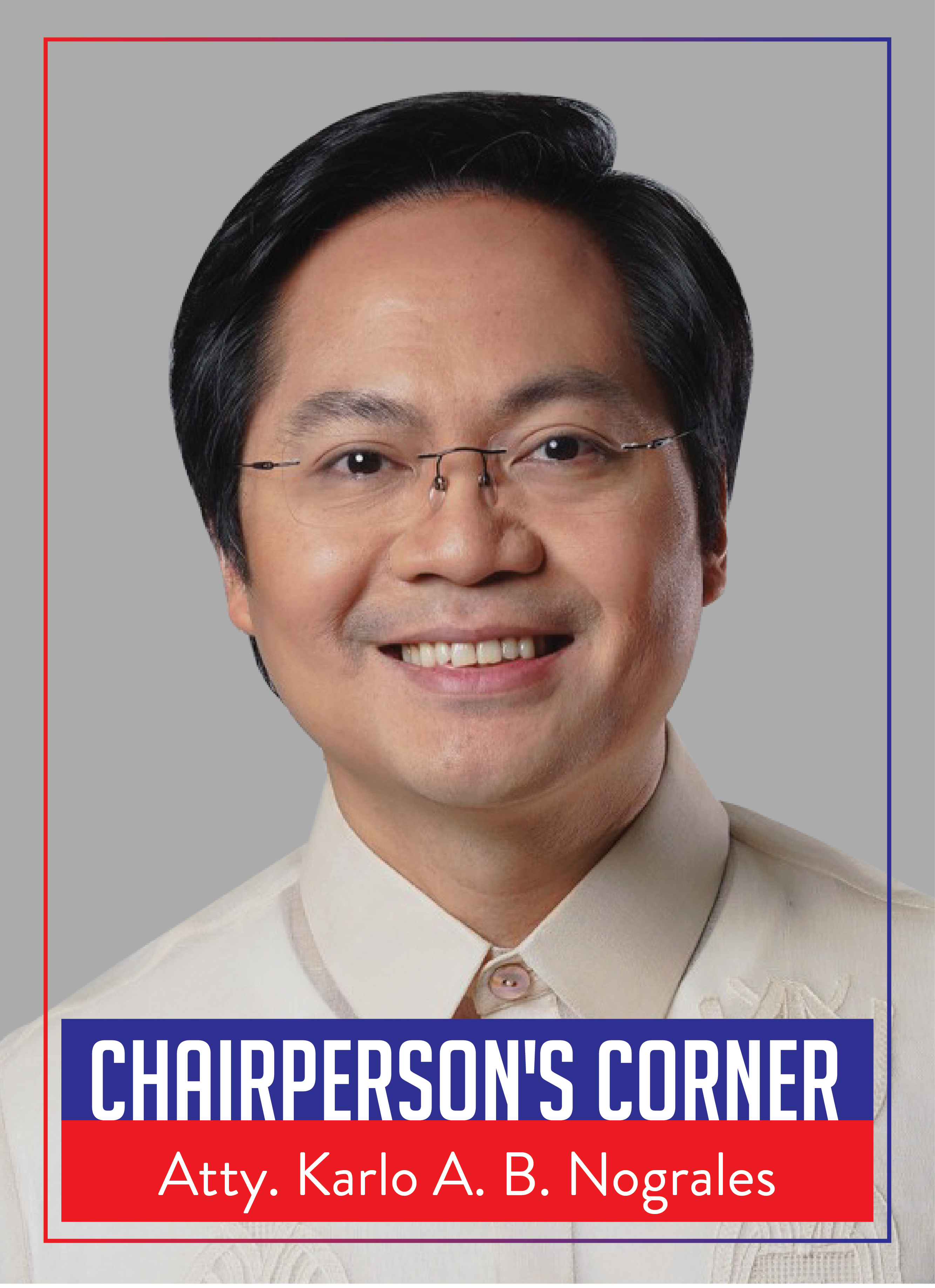
CSC Chairperson Karlo Nograles explained that the CSE-PR is granted to eligible workers who have served for at least 10 years and have demonstrated valuable skills but lack the specific eligibility for plantilla positions.
Read more: CSC takes action to extend eligibility for JO, COS workers
- Details
“Good employee relations is vital in advancing employee welfare and participatory governance.” This was emphasized in a message delivered by Civil Service Commission (CSC) Chairperson Karlo Nograles during the launch and ceremonial signing of the 2024 Rules and Regulations Governing the Exercise of the Right of Government Employees to Organize held on 29 April 2024 at the Justice Hall of the Department of Justice (DOJ).
The 2024 Rules and Regulations is an integration of promulgated and published policy resolutions approved by the Public Sector Labor Management Council (PSLMC) over the years following the latest amendment in 2004. It includes amendments on conciliation services, effectivity of collective negotiation agreements, and recognition of national employees’ organizations.
“The promulgation of the 2024 Rules is a testament of the Council’s commitment to continuously improve and safeguard the exercise of the right to self-organization in the public sector. We recognize that the new rules and regulations may not be absolutely perfect, considering the dynamic environment that they will operate within. However, this acknowledgment should not deter us from actively engaging in shaping the trajectory of employee relations in the public sector,” stated Chairperson Nograles.
Read more: Rules on government workers' right to organize strengthened
- Details
The Civil Service Commission (CSC) has secured commitment from the Asian Development Bank (ADB) to provide technical assistance to the Commission’s digital transformation (DX) strategy.
CSC Chairperson Karlo Nograles and Commissioner Aileen Lourdes Lizada led the Kick-Off Meeting for the ADB Technical Assistance (Supporting the Digital Transformation of the Civil Service) together with ADB Country Director for the Philippines Pavit Ramachandran and ADB Principal Management Specialist for eGovernance Seok Yong Yoon.
"ADB’s support marks the beginning of a new chapter in our digital journey in the CSC,” said Chairperson Nograles as he emphasized the importance of this partnership in advancing the Commission’s digital agenda.
Read more: CSC receives ADB support for digitalization program
- Details
College graduates who have earned Latin honors are urged to apply for the Honor Graduate Eligibility (HGE) if they wish to pursue a career in the public sector.
“Summa cum laude, magna cum laude, and cum laude graduates no longer need to take the Career Service Exam as they may avail of the special eligibility. We are eager to work with these bright and fresh minds to bolster the quality of public service,” said Civil Service Commission (CSC) Chairperson Karlo Nograles.
Chairperson Nograles shared that the HGE, granted pursuant to Presidential Decree No. 907 issued on 11 March 1976, may be availed of by bachelor’s degree graduates either from the conventional mode of learning or Open Distance Learning (ODL), regardless of the number of years of completion.
Read more: CSC offers special eligibility for honor graduates
- Details
The Civil Service Commission (CSC) notes the new resolution of the Metro Manila Development Authority (MMDA) and Metro Manila Council (MMC) to adopt the flexible working schedule for public servants in local government units (LGUs) in the metro as a temporary solution to traffic congestion.
In a statement, CSC Chairperson Karlo Nograles noted that the implementation of a modified working schedule from 7 a.m. to 4 p.m. for officials and employees in LGUs is consistent with the Policy on Flexible Work Arrangements (FWAs) issued by the CSC for agencies and government workers nationwide.
“The CSC's policy on FWA has influenced at least 499 agencies to adopt internal guidelines by end of December 2023, but we need more agencies to follow suit, especially in Metro Manila. This new development from the MMDA, with the support of the MMC and local officials, is crucial in improving the welfare of civil servants in LGUs, especially those who do not own cars and commute to work every day,” he said.
Read more: Modified work schedule in accordance with CSC policy